
Flock Cameras Come to Barnesville
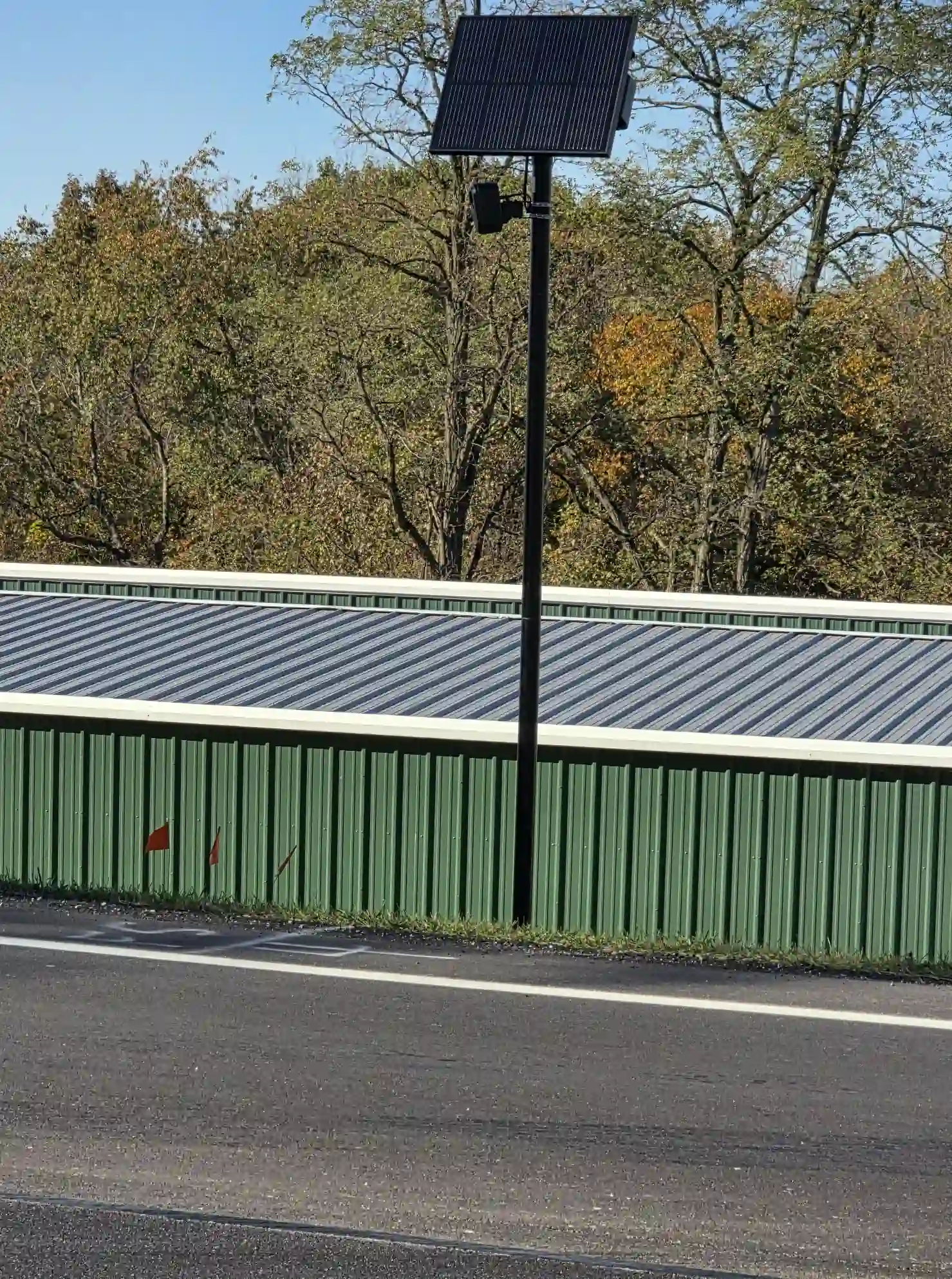
The issue and debate about Flock Cameras are not specific to Barnesville. It is a debate going on regionally and nationwide.
At Monday’s Village Council meeting, Mayor Jake Hershbrger amended the Agenda to add a Flock discussion under “Safety”.
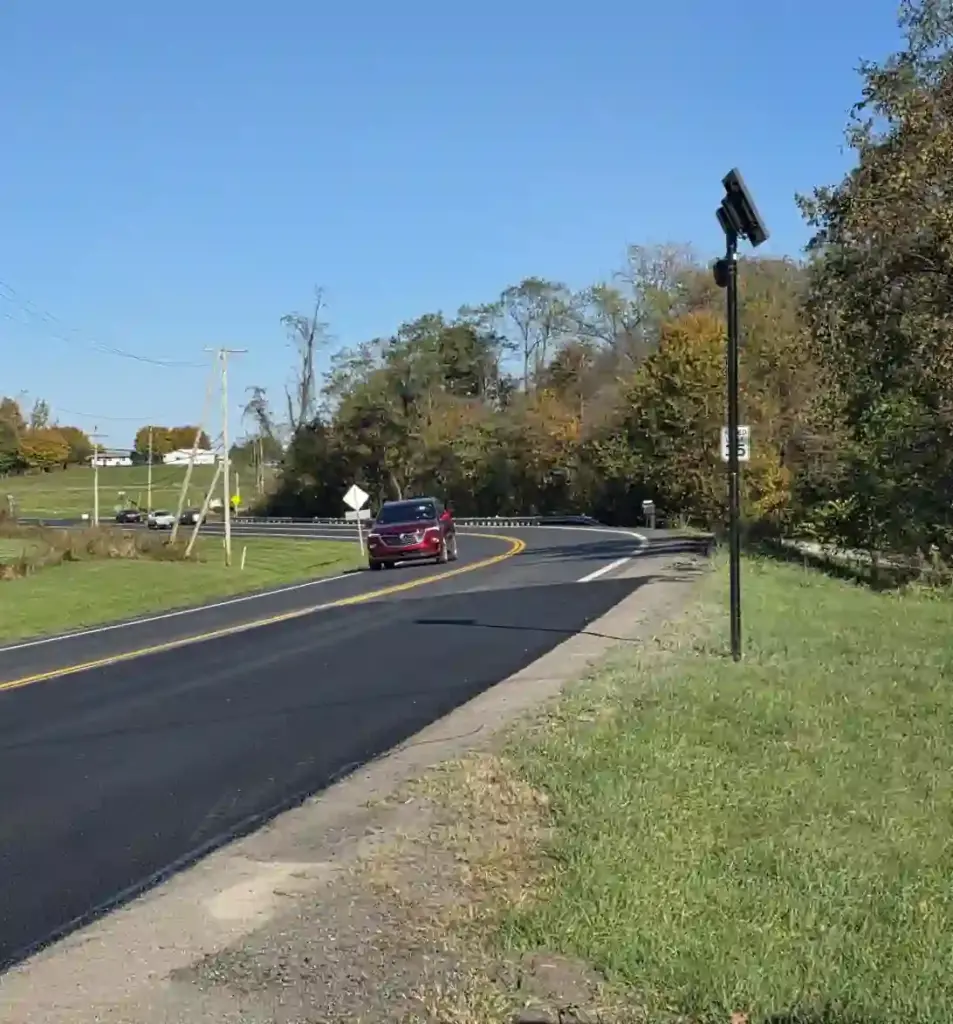
The previous week, at least four Flock cameras were installed in the village including two at East Main and Roosevelt Road on SR 147.
Flock cameras are automated license plate reader and surveillance camera systems by Flock Safety, a private company.
The cameras came to Barnesville after Police Chief Rocky Sirianni received approval from council to apply for a JAG grant to lease the cameras.
Minutes of June 16, 2025, reveal the estimated cost for the first year to lease the units would be $12,000 with the village’s cost $3,000. The request was unanimously approved by council. Read the minutes here.
What was unstated at the time was how the cost for subsequent years would be funded.
The topic was raised this week by the mayor who noted cameras were installed on Wednesday.
“So we’re still trying to collect data or learn more on the user agreement for sharing and stuff like that,” Hershberger said.
“Chief Tippie just got me the auto license plate reader policy, which is something we have to have and that I haven’t reviewed yet, but we’ll review it.”
Council President Brad English spoke first.
“Do we have a policy that dictates use? Who can it be shared with and how do they do it? Is there anything in place that says who we are sharing this information with? Who can view it or how can they view it?
“I don’t agree with any of this,” English said. “I would never have voted for these…and it’s not personally directed. I’m just totally against that 100%.”
“We set our own terms as far as who we can share the cameras with,” Police Chief Tippie said. “I personally have to approve everyone who requests that.”
“So you have total say of who sees it, how they see it, when they see it?” English asked.
“it’s just me right now because I am the only user on the system,” the chief said.
Hershberger provided an example of reciprocal data agreement with St. Clairsville and how that could work.
Tippie provided additional examples of how it might work with another municipality or government agency. Tippie further noted that the “leads” must be viable. Each “hot list” lead is assigned a case number but “there needs to be a reason why you’re searching for it,” he said.
English peppered his inquiry with additional scenarios and possible agreements.
Hershberger offered to work with council on the matter and that former Chief Sirianni “was talking about getting it on the village website, a transparency portal, so everyone can see who has access to it, an option that Flock makes available”.
“If council wants to give more guidance to the chief, they can,” Hershberger said.
“I’m kind of on the other side,” council member Mark Lucas said. “If it makes your job easier, I don’t care if you look at my license plate.”
Lucas used the example of the young person who came up missing during the festival. If the department had the plate number of the car, it might have solved the problem for us.
Lucas questioned how long the video was retained in the system though.
“I think it’s seven days,” Tippie said.
“The other side of this is that every single license plate that drives by that camera is read by that reader,” resident Brock Rogers said.
“If I’m walking down the street, the chief does not have the ability to just ask for my ID if he doesn’t suspect me of a crime. So, how is every single person that’s driving by there getting ID’d without being suspected of a crime?”
“That’s where the policy is going to dictate…what you can actually retrieve and there’s no facial recognition, it’s only a vehicle and plate identification,” the Mayor responded.
“If somebody on the department would want to search a plate number, they have to have reasonable suspicion to actually search the plate number.”
“As we get more information on Flock cameras, we’ll try to get that out to the public and on the website,” the mayor said wrapping up the discussion.
The issue is already a hot topic in nearby Cambridge.
This week’s edition of the weekly Guernsey News carries two front-page headlines “Residents Protest Proposed Use of Flock Cameras in Cambridge” and “Cambridge City Council Meeting Erupts Over Flock Camera Controversy”.
In fact, the October 13 city council meeting “drew a standing-room-only crowd as residents demanding the removal of Flock surveillance cameras packed the chambers, waiving signs and voicing passionate objections during a session that stretched into the evening,” writer Justin Carpenter reported.
___________
Background
The Bureau of Justice Assistance FY25 Edward Byrne* Memorial Justice Assistance Grant (JAG) Program provided federal funding to support local and state law enforcement, crime prevention, victim assistance, and public safety initiatives, a web source revealed.
Nationally, $295.5 million was allocated to the 50 states for “Law enforcement operations, violent crime reduction, prosecution/courts, crime prevention, corrections, drug treatment, and mental health/crisis intervention.”
Ohio funds were distributed through the Ohio Office of Criminal Justice Services.
*Edward Byrne was a police officer in the New York City Police Department who became well known in the United States after he was murdered in the line of duty in 1988.

Barnesville Area News Needs Your Support!
We're dedicated to providing coverage of the local happenings in Barnesville and the neighboring communities.
As a non-profit entity, we rely on the donations of readers like you.
Make a donation today and you'll be helping keep local news alive in the Barnesville area.