
‘Vision Plan’ Shared with Barnesville Community
Many residents attended a meeting Thursday evening to learn the results of last year’s community survey and learn how the village could move forward through a newly developed vision plan.
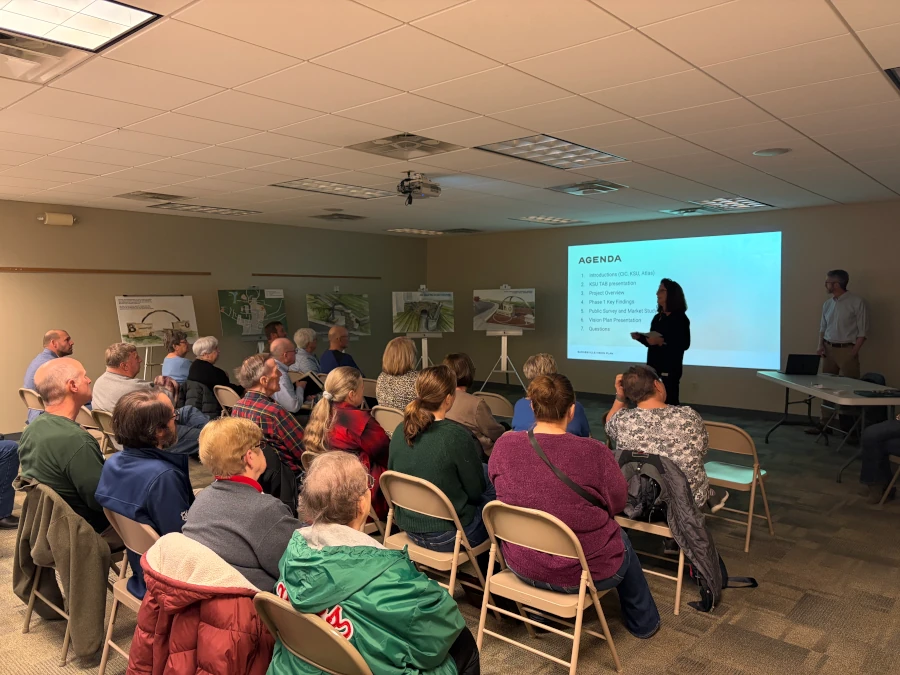
Barnesville residents learn about the vision plan assembled for the village. ©Barnesville Area News Company Photo.
Community Improvement Corporation of Belmont County Executive Director Crystal Lorimor, Atlas Community Studios Community Development Director Jamie Greene and Regional Director for the Technical Assistance to Brownfields program at Kansas State University Roxanne Anderson shared the Barnesville Vision Plan at the meeting.
Anderson explained the federally funded program provides free assistance to communities working to redevelop brownfield sites. Funded through a grant from the United States Environmental Protection Agency, the program offers services such as market studies, site visioning and redevelopment planning tailored to each community’s needs.
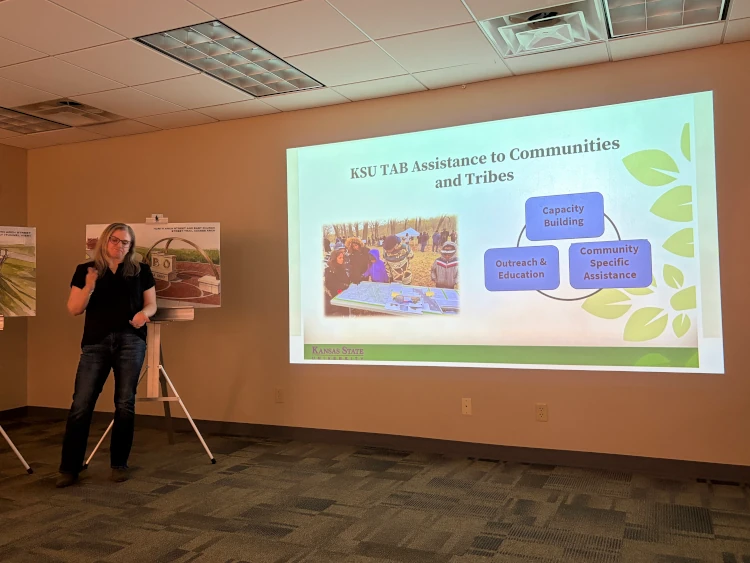
Regional Director for the Technical Assistance to Brownfields program at Kansas State University, Roxanne Anderson, speaks about her role in the Barnesville Vision Plan project. ©Barnesville Area News Company Photo.
Anderson said her team partnered with local officials and organizations to develop Barnesville’s brownfield inventory, community survey and vision plan, which will serve as a tool for guiding future redevelopment efforts.
Lorimor stated the vision plan provides ideas for organizations, agencies and committees in the village of Barnesville to utilize moving forward. The goal of the plan is to give ideas to strengthen existing assets, link key sites and identify next steps for the village and its partners.
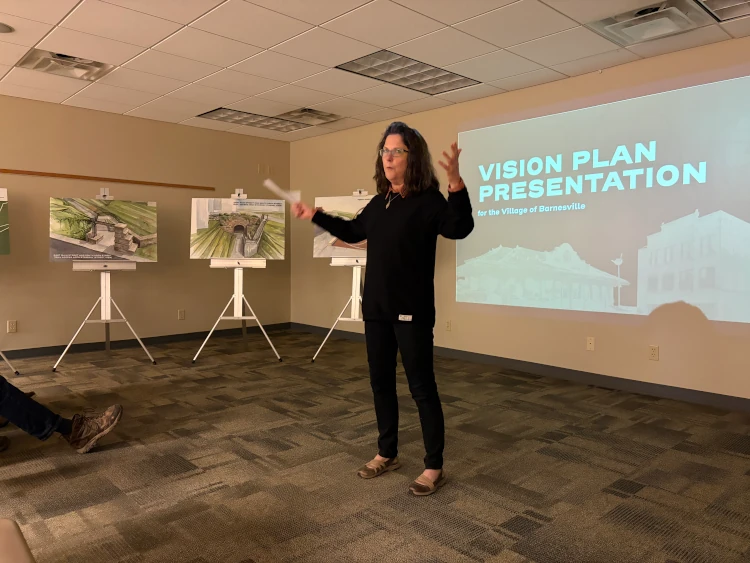
Community Improvement Corporation of Belmont County Executive Director Crystal Lorimor introduces the community to the Barnesville Vision Plan meeting Thursday evening. ©Barnesville Area News Company Photo.
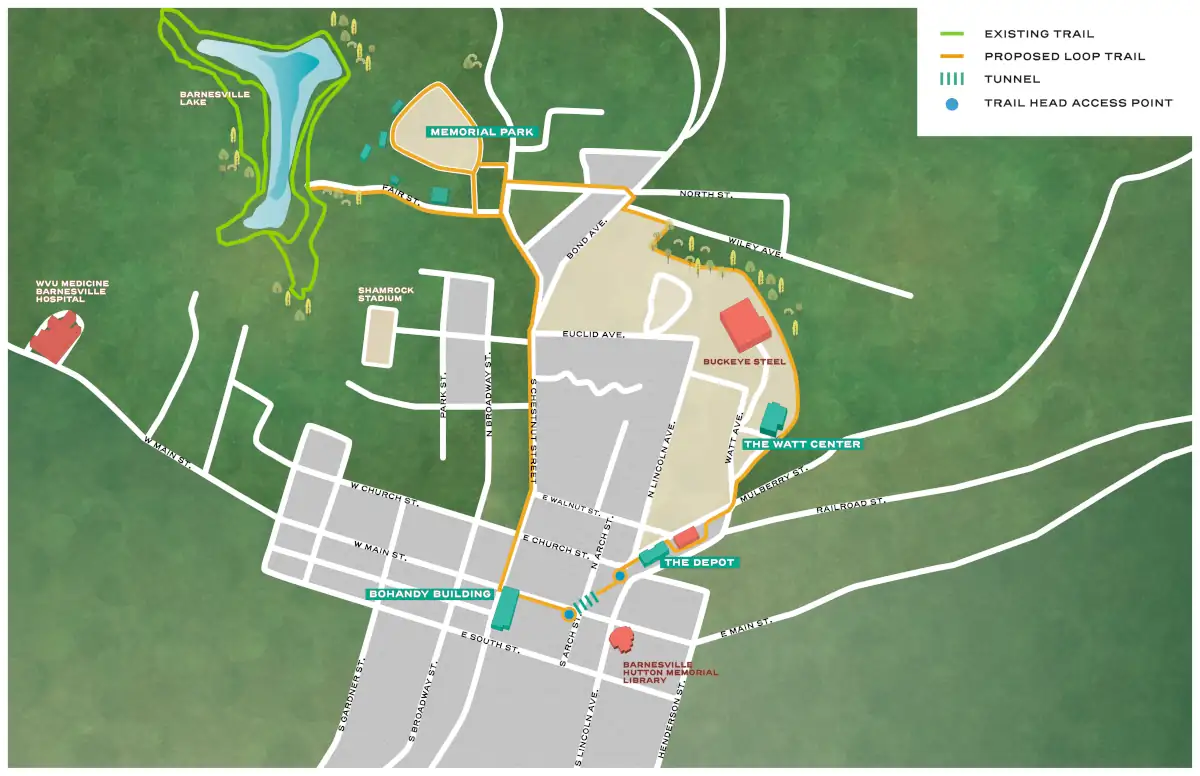
Greene highlighted four key “anchors” along a proposed loop trail that could help strengthen the village’s future: the Depot, described as the “threshold;” the Watt Center for History & the Arts, representing “depth and meaning”; Memorial Park, identified as “everyday life;”and the Bohandy Building, representing downtown stability.
“It’s relying on the assets you have, not trying to bring in business nor land this company or that company,” he said. “It’s developing the assets you guys have. And you’ve got an incredible historic district.”
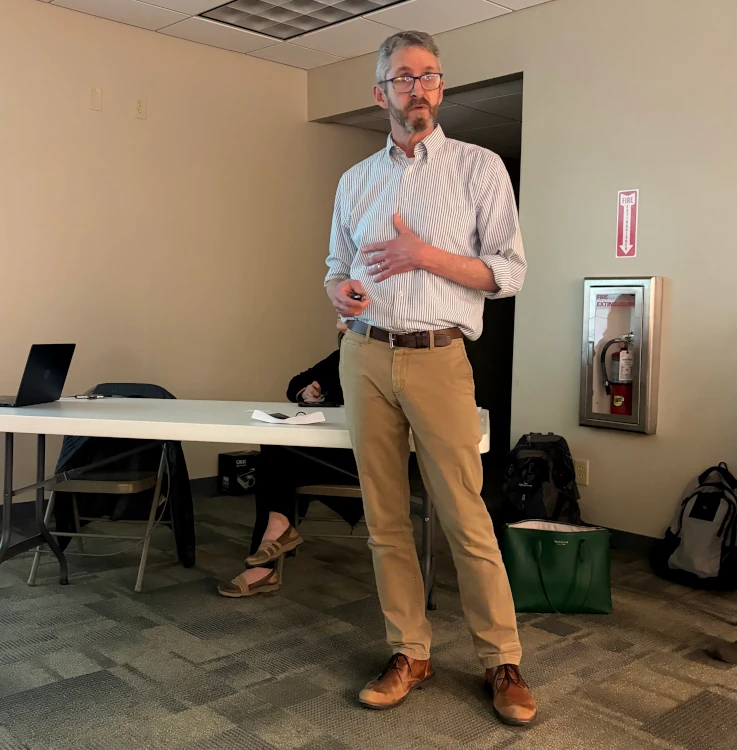
Atlas Community Studios Community Development Director Jamie Greene reveals the ideas, survey results and market analysis from the Barnesville Vision Plan Project. ©Barnesville Area News Company Photo.
At the heart of this Vision Plan is a proposed loop trail that connects downtown Barnesville, the Depot, the Watt Center for History & the Arts, and Memorial Park. With one limited exception involving a new segment on the former Watt Car and Wheel village-owned property, this loop relies on existing village roads, sidewalks, and trail segments rather than new or speculative infrastructure. The focus is on making those connections clearer, more comfortable, and more inviting for people on foot.
The loop trail serves two purposes at once. It is a recreation and quality-of-life investment that builds on Barnesville’s existing trail assets and Memorial Park amenities. It is also a downtown revitalization tool that draws people from Main and Arch Streets toward the trail, the Depot, and other community destinations, then brings them back downtown. These goals reinforce each other: recreation brings people in, and downtown activity gives them reasons to stay.
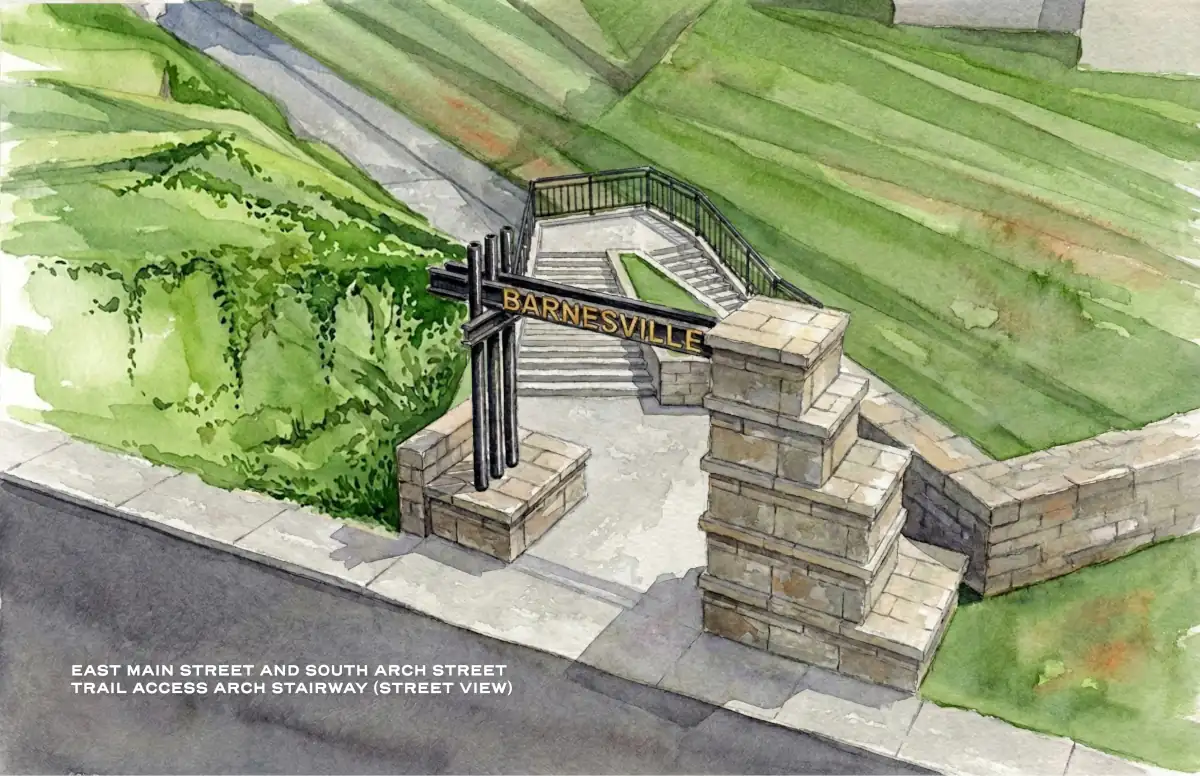
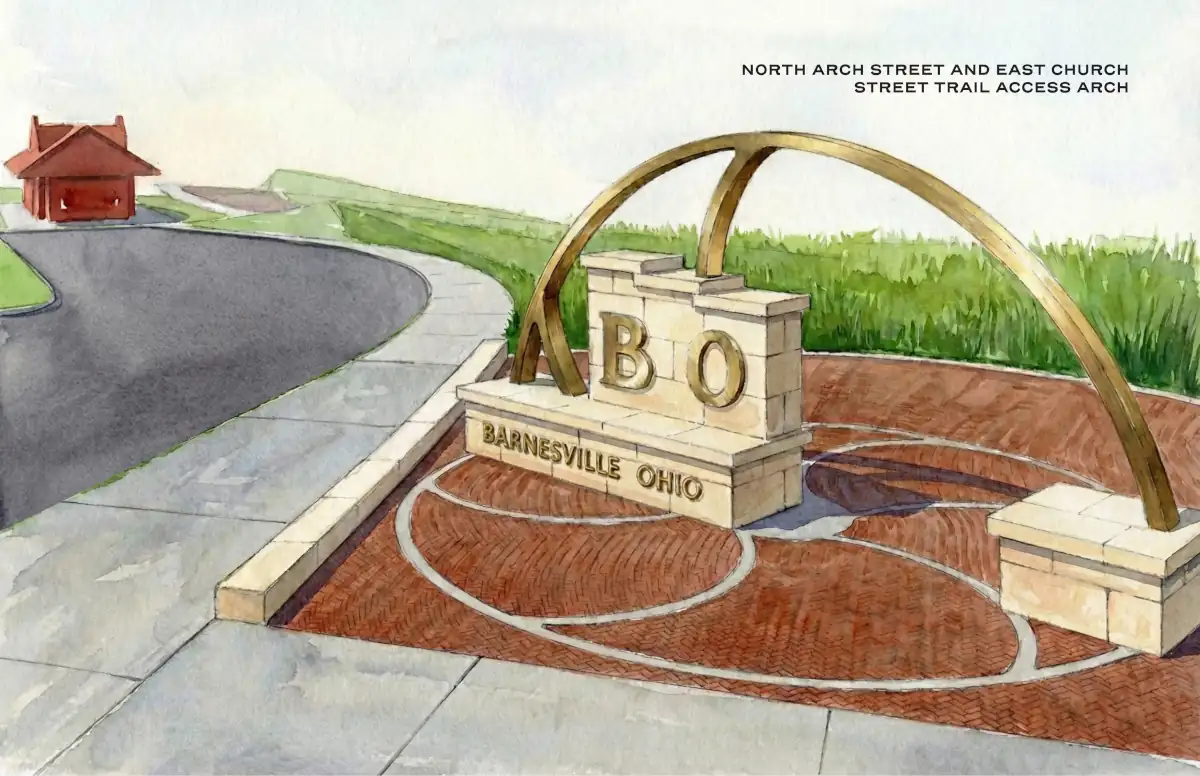
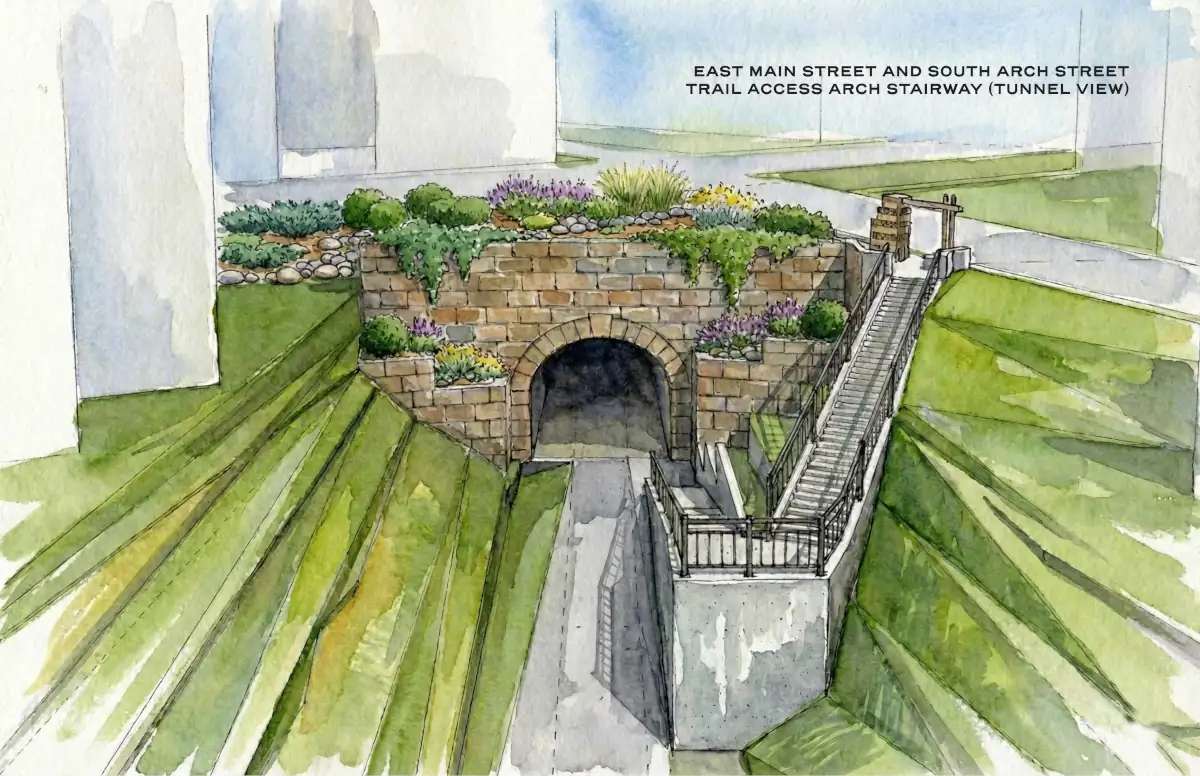
A critical part of this approach is creating and improving highly visible access points that connect downtown directly to the trail system. Rather than treating the trail as something hidden behind buildings or down a hillside, the Vision Plan treats trail access as a front-door experience that is easy to see, understand, and use.
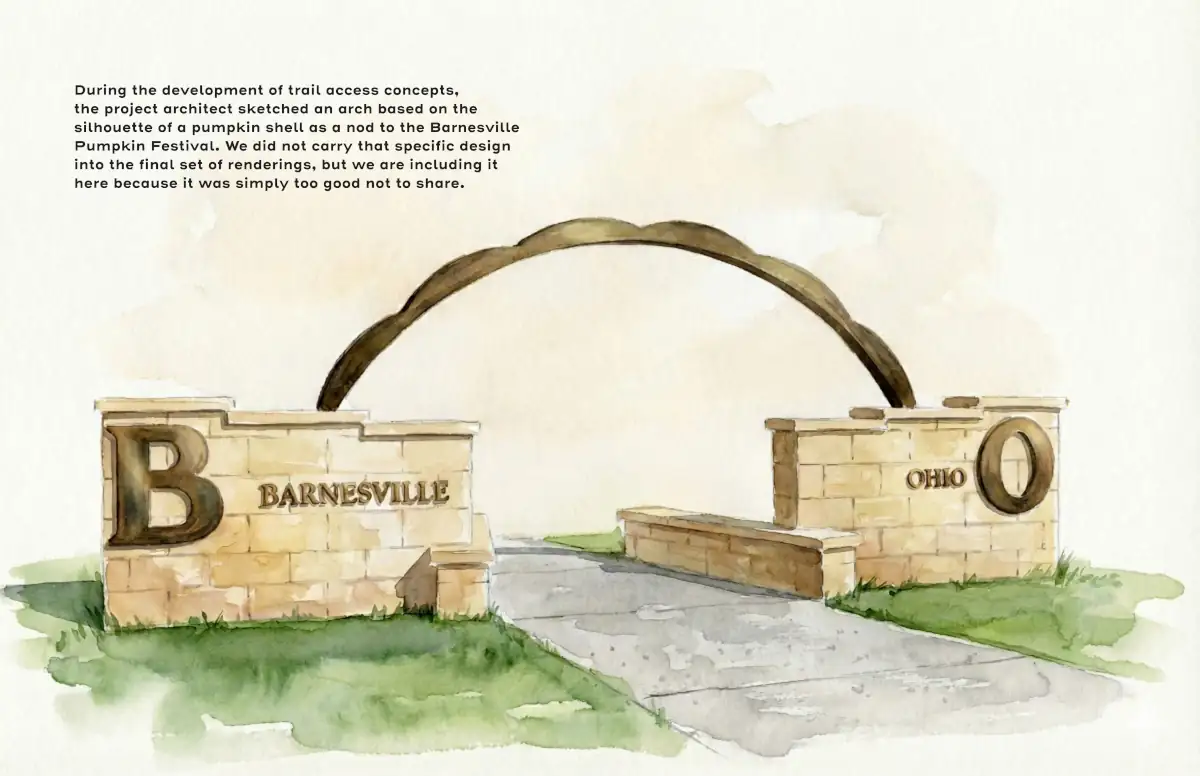
As part of the proposal, concept drawings were created to provide a peek into what an execution of that plan could look like. Those drawings included a proposed staircase from the corner of East Main Street and South Arch Street leading down to the trail in the former railroad bed, as well as arches taking inspiration from the self oiling mining car wheel, patented by the Watt Car & Wheel Company, and the shell of a pumpkin as a nod to the Barnesville Pumpkin Festival.
Presenters also shared results from the community survey and market analysis conducted as part of the project.
The survey received 855 responses, and results showed 77% of people visit downtown, referred to as the “focus” area, multiple times per week and 82% shop and dine locally because it is convenient. However, 66% travel outside of the village for restaurants and shopping.
Residents expressed interest in stronger retail options, improved sidewalks, more restaurants and coffee shops, entertainment opportunities and increased walkability. Many respondents also supported using the Depot Grounds for markets and family activities while protecting the village’s small-town charm, historic character and the Pumpkin Festival.
Greene also outlined several economic and demographic realities affecting the village.
The presentation noted that Barnesville’s population is declining and aging, with a median household income of $55,459 and a poverty rate of 20.1%, which exceeds county and state averages. Most residents hold a high school diploma, while relatively few have advanced degrees.
Housing data showed that only 10.7% of homes were built after 2010. While housing costs for homeowners remain relatively low, renters face higher costs with a 66% cost burden.
The presentation also revealed that unemployment is low at 1.3%. Filling healthcare and skilled trade jobs is difficult, as local workforce training options are limited and entry-level workers lack both technical and soft (communication) skills.
Barnesville is a commuter town and the lack of activities and amenities for families and young people is a barrier to attracting and retaining workers.
A recent brownfield inventory identified 243 commercial and industrial parcels in Barnesville, including 69 commercial buildings.
The village maintains a stable base of essential services, and commercial rents average about $11.65 per square foot, making them competitive for the region. However, infrastructure upgrades are needed and blight remains a concern.
At the same time, presenters noted that recent investments, including improvements to the State Theater and the AMFg project, show positive momentum in the community.
Spending data also indicated strong demand for everyday goods, services and amenities. Many residents leave Barnesville to shop or dine elsewhere, particularly for clothing, sit-down restaurants and entertainment.
On that note, restaurants ranked as the most requested type of new business, followed by health and personal care services, apparel and shoe stores and family-oriented activities.
“I hope the various organizations and committees will take this information and use the survey results to support their goals and what they’re trying to do,” Lorimor said.
Graphics from the full report are shown below. A link to the full report is also shared:

Barnesville Area News Needs Your Support!
We're dedicated to providing coverage of the local happenings in Barnesville and the neighboring communities.
As a non-profit entity, we rely on the donations of readers like you.
Make a donation today and you'll be helping keep local news alive in the Barnesville area.